Peptide Purity Evaluation Service
Confirmed > 99% Lab-grade Peptides
- Peptide testing paperwork should be taken batch-level analytical evidence for research product, not as clinical-use consent.
- For example, in order to ensure success in different peptide experiments, it may be essential to remove trifluoroacetic acid (TFA), or to evaluate the solubility of hydrophobic peptides prior to performing the required experiments.
- In COA review, it generally includes HPLC purity screening, mass spectrometry identification verification, and batch-specific paperwork showing the examined great deal, technique, results, and date.
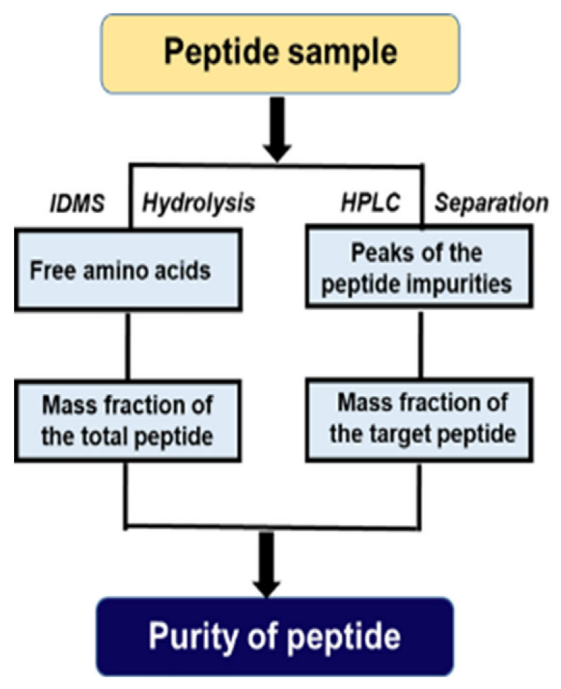
- Significantly, this purity number is typically determined after purification (e.g. by HPLC) and concentrates on peptide pollutants-- it does not count residual water, salts, or counter-ions in the dried out peptide powder.
Peptide Screening: Hplc & Mass Spectrometry Purity Confirmation
Other spectroscopic methods, such as Infrared (IR) or UV-Vis evaluation, are in some cases utilized for quick quality checks or structural verification. This is why reputable distributors offer both HPLC and MS data on their Certificates of Evaluation. Peptides in microspheres and nanoparticles might ensnare with matrices, making it difficult to divide cost-free and encapsulated forms. We use dialysis, ultrafiltration combined with HPLC/UV approaches to clinically examine encapsulation performance and drug loading. These analyses are beneficial when clients need greater than a mass spectrum and chromatogram to judge whether a Amino acid and peptide register great deal is really fit for quantitative job.Can Hplc Detect Peptide Destruction?
If you have actually ever before surfed a peptide directory, you have actually seen purity numbers everywhere. These numbers obtain sprayed so often that it's very easy to gloss over them-- just another spec on an item web page. Chameleon Peptides markets research compounds solely for lab and logical functions. All PRG items are intended exclusively for in vitro research study or more manufacturing usage. Making use of a very purified peptide minimizes these dangers and improves the dependability of your information. 